
Investors Need Govt Clarity on key reforms for a Bankable Funding Model of Transmission Expansion
South Africa’s electricity reform under the Electricity Regulation Amendment Act has reached its most decisive phase – and there is no turning back to the envisaged reforms. The unbundling of Eskom into generation, transmission and distribution entities has made one fact unavoidable: without a financially viable, bankable commercial model for an independent transmission operator, the entire reform programme risks stalling.
According to the Government’s 2024 Transmission Development Plan (TDP), the national grid must expand rapidly to unlock new generation capacity, address renewable integration bottlenecks, and stabilise the grid. TDP forecasts that approximately 56 GW of new generation capacity will need to be integrated into the transmission network between 2025 and 2034. The plan estimates that some 14,000 kilometres of new transmission lines, with an estimated expenditure of R112bn to be spent in the first five years and about R400bn in total funding, will be required to expand the network. This is one of the largest infrastructure build programmes in democratic South Africa’s history.
Private sector funding required
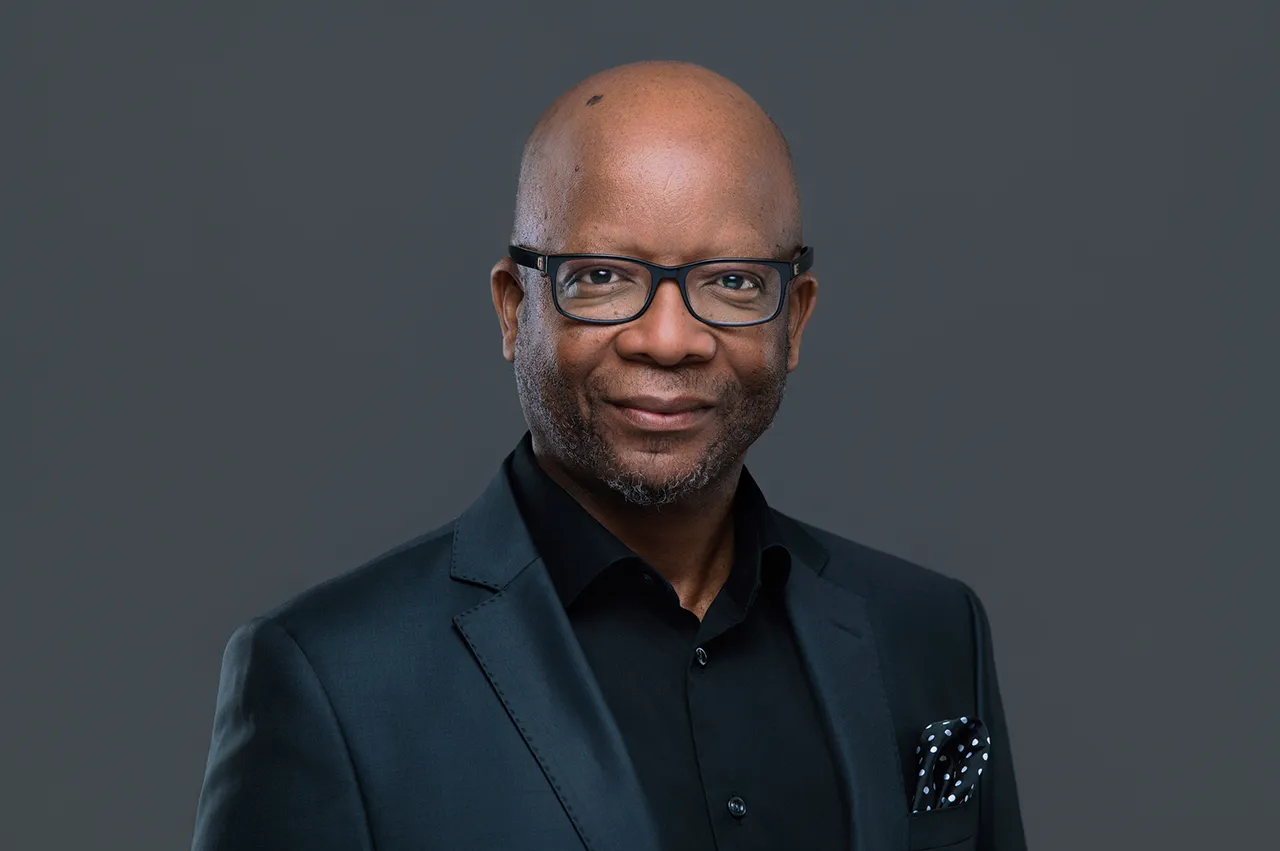
According to Tsatsi Mahlatsi, CEO, Mzansi Energy Consortium, the fiscus’s limited resources create challenges for the state to realise the objectives of the envisioned energy sector reforms. “Due to competing needs the state does not have adequate capital to fund the transmission expansion. Eskom is also burdened with a huge debt exceeding R400bn, meaning it cannot finance it either. This leaves few realistic options, such as the Just Energy Transition funding (US $8.5 billion) and large-scale private sector investment participation. When it comes to the private sector, the question is no longer whether private capital is needed, but whether the government has a well-defined commercial structure, to incentivise their participation, with clear and acceptable risk allocation and the suitable funding model that makes transmission investment opportunities bankable.”
Mahlatsi points out that at present, policy direction is clear, but debates remain on whether the National Transmission Company of South Africa (NTCSA) should remain as a subsidiary of Eskom or should it be spun out of Eskom and reconstituted as an independent Transmission System Operator. He further states that the regulations provide for regulatory certainty and the framework is enshrining transparency, predictability, and confidence, thereby ensuring bankability of the transmission programme. However, even though the transmission business is in the process of being separated from Eskom, uncertainty remains around its final structure (unbundled from the tariff structure) and its funding model. In particular, what will happen to Eskom’s enormous debt, and how revenue from future sales of electricity will be distributed between unbundled generation, transmission and distribution companies?
In recent years, South Africa has relied heavily on the Renewable Independent Power Producer Procurement Programme (REIPPPP), administered through the Independent Power Producer Office, to procure generation capacity using Power Purchase Agreements that prioritise low tariffs through competitive bidding. That model has delivered new generation capacity, but it is not automatically suitable for transmission infrastructure roll-out. The market is still waiting for government to develop a framework to introduce private sector participation (PSPs) / independent transmission projects (ITPs) as an alternate model to develop and fund infrastructure roll-out for the transmission programme.
Says Mahlatsi: “The transmission business model is different to distribution or generation. It is long-life, capital-intensive infrastructure that requires stable, predictable revenue over decades. Investors in transmission projects require a clear tariff regime, long-term concessions or contractual revenue guarantees, and regulatory certainty. Without these fundamentals, no pension fund, development finance institution or infrastructure investor can justify taking the risk without these key pillars.”
Two funding models for policymakers to consider
The first is an extension of the current procurement approach, where private investors build infrastructure under contract models under power purchase agreements (PPAs), with revenues determined through regulated tariffs and long-term Transmission Service Agreements (TSAs).
The second is the public–private partnership model (PPP) / Independent Transmission Project (ITP) concession funding, in which private investors finance, build, operate and maintain infrastructure under long-term concession agreements, often structured as build–own–operate–transfer arrangements, with assets returning to the state at the end of the concession period. However, in the instance where the NTCSA is the Transmission System Operator as envisaged, this could result in a concession period with or without operations and maintenance. The details of what works for both the private sector and the public sector under the chosen modality need to be unpacked further.
Bankability is key
Both models exist internationally. Both can work. But neither will succeed in South Africa without one critical condition: bankability. Bankability depends on three fundamentals:
A clear revenue model for transmission, including how tariffs are structured and how income is generated per kilometre, per capacity unit or per energy flow.
Long-term contractual certainty, through concessions or legally enforceable service agreements.
Regulatory clarity, including tariff determination, asset ownership, and debt allocation within the unbundled electricity system.
At present, none of these are fully defined for the transmission business.
Uncertainty remains over how transmission tariffs will be unbundled from Eskom’s current vertically integrated bundled pricing model, how the energy regulator will allocate revenue across generation, transmission and distribution, and how debt obligations will be treated in the unbundled system. Investors cannot price risk in an environment where the revenue structure itself is undefined.
International experience is clear: transmission investment flows only where revenue is predictable and contracts are long-term. Toll roads, ports, rail concessions and fibre networks all follow this principle. Electricity transmission is no different.
A strategic decision point
If the transmission expansion programme is structured without a bankable and credible commercial model, private capital will remain on the sidelines, project delivery will slow, and energy reform will fail to meet its economic objectives. If it is structured correctly, the transmission build roll-out programme can become one of the largest successful infrastructure investment programmes in the country’s history, unlocking industrial growth, renewable energy expansion and long-term energy security.
Mahlatsi believes the energy sector reforms should move with speed and clarity in the finalisation of unbundling of tariffs, determination of cost-reflective transmission charges and treatment of Eskom’s historical debt. In dealing with the above matters, this will give potential investors confidence and clarity on the viability of the business case for investment in the sector. “The key policy question is not whether transmission should involve private capital, but how that capital is mobilised in a way that balances the public interest, while protecting the investors and ensuring attractive returns on investment,” he concludes.
About Mzansi Energy Consortium
Mzansi Energy Consortium is a leading renewable energy developer in South Africa, formed through a partnership between Summit Partners and Journey2Green. The consortium delivers bankable, technically advanced clean energy projects with a strong emphasis on socio-economic upliftment. Discover more at https://mzansi.energy/
Media Contact:
Tumi Mogoera, Chief Marketing Officer Mzansi Energy Consortium
Email: tumi@mzansi.energy
Issued by: Michelle Oelschig, Scarlet Letter
Contact details: 083-636-1766, michelle@scarletletter.co.za